
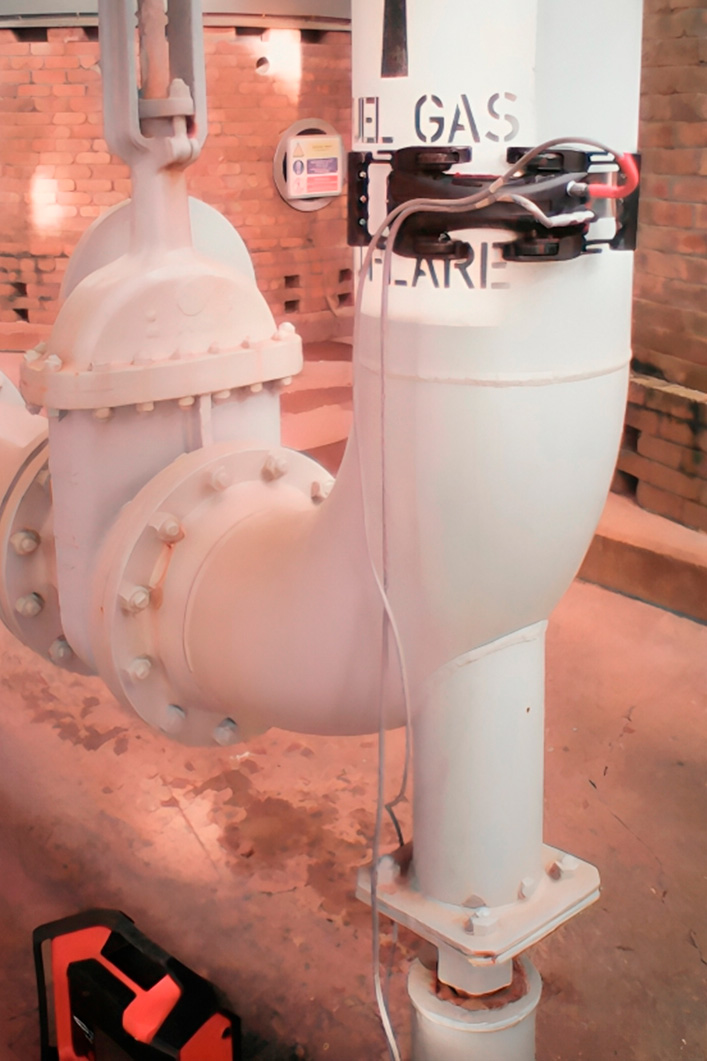
Inspecting dead leg supports is a primary application within the broader scope of Corrosion Under Pipe Supports (CUPS). A client sought to evaluate the VOLTA 2 MRUT SH capabilities for detecting corrosion under dead leg supports at their facilities.
LEER MÁS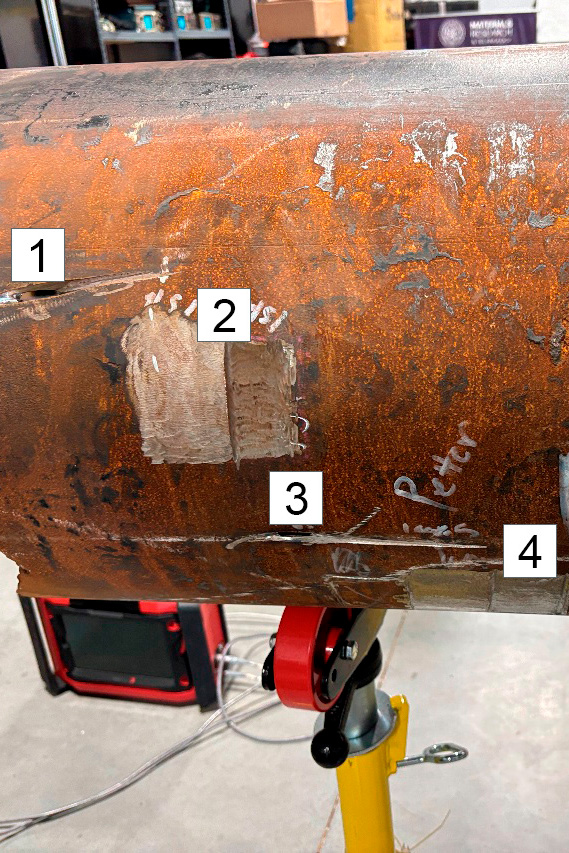
Arix Technologies sought to evaluate the MRUT SIZING application using VOLTA 2 for their inspection operations. To assess the application's performance, they provided a pipe sample containing conditions commonly encountered in the field, along with four artificial defects designed to challenge remaining wall thickness estimation.
LEER MÁS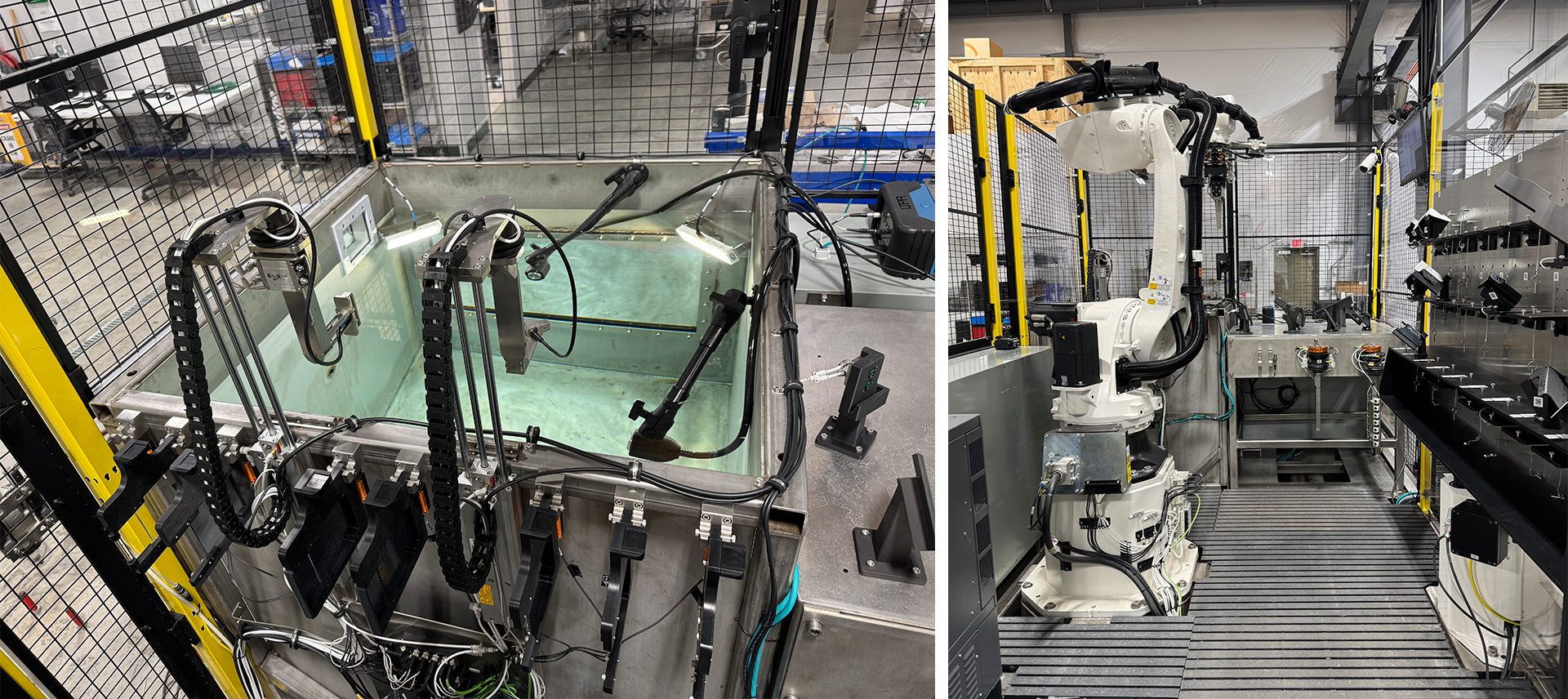
Innerspec successfully deployed an automated ultrasonic inspection cell for thermoplastic composite clips at an Aircraft manufacturing facility in the United States.
LEER MÁS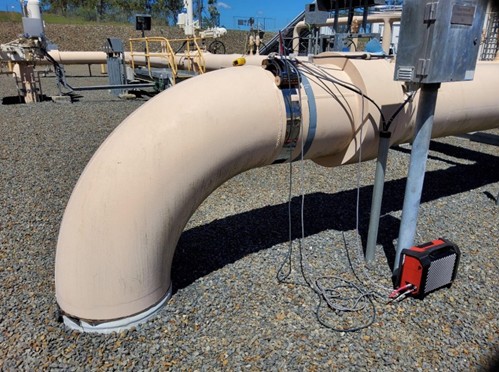
An Australian LNG Company has many gas field riser pipes in remote locations. The risers are wrapped in various mediums depending on the chosen wrap technology at the time that they were constructed. Currently, the LNG Company policy is to excavate the risers and strip the wrap to visually inspect the pipes for external corrosion.
LEER MÁS
Assessing steel culverts for corrosion using conventional wet-coupled ultrasonic instruments presents significant challenges. The location and size of these structures often necessitate scaffolding or complete road closures to achieve proper sensor contact with the substrate using couplant. Additionally, due to the presence of sprayed concrete on some areas of the galvanized steel walls and heavily corroded sections, it is not possible to fully conduct the inspection with conventional wet-coupled ultrasonic equipment.
LEER MÁS
A leading petrochemical company has successfully integrated CODA for on-site inspection and maintenance within its facilities in Nigeria. CODA serves as a vital tool for spot thickness measurement across conditions, including high-temperature environments.
LEER MÁS
Los pernos y los tornillos son una de las técnicas de unión más comunes, ya que permiten unir dos materiales cualesquiera, aunque sean diferentes. Los pernos se utilizan en la mayoría de las industrias críticas y exigentes, como las infraestructuras, la generación de energía, el petróleo y el gas, la petroquímica, la minería, la construcción y el transporte, entre otras.
LEER MÁS
A leading UK resource management company faces the high-stakes challenge of maintaining boiler integrity within its London-based Energy-from-Waste (EfW) facilities. Because these boilers incinerate waste at extreme temperatures ($800$ to $1,100$ °C) in highly corrosive environments, the thousands of internal tubes are susceptible to rapid wear. Constant monitoring of tube wall thickness is critical, as a single leak would force an immediate process stoppage, leading to significant plant downtime and substantial financial losses.
LEER MÁS
En la industria ferroviaria es fundamental controlar el estado del material rodante y los componentes de la vía para evitar paradas imprevistas y, lo más importante, para garantizar la seguridad de los pasajeros. Además de los errores en fabricación, las ruedas de tren se enfrentan a condiciones extremas, como la alta velocidad o las altas temperaturas producidas en gran parte por los esfuerzos de frenado. El incremento de las tensiones residuales es una de las consecuencias más importantes y, por tanto, se deben poder medir de forma fiable para evitar roturas y accidentes.
LEER MÁS